MIT Endowment Returns 10.3% in Fiscal 2026 and Reaches $29.2 Billion
MIT's endowment returned 10.3% in fiscal 2026 and reached $29.2 billion, with an 11.7% ten-year annualised return. Stanford and Penn both posted returns above 27%, so the gap is wide.
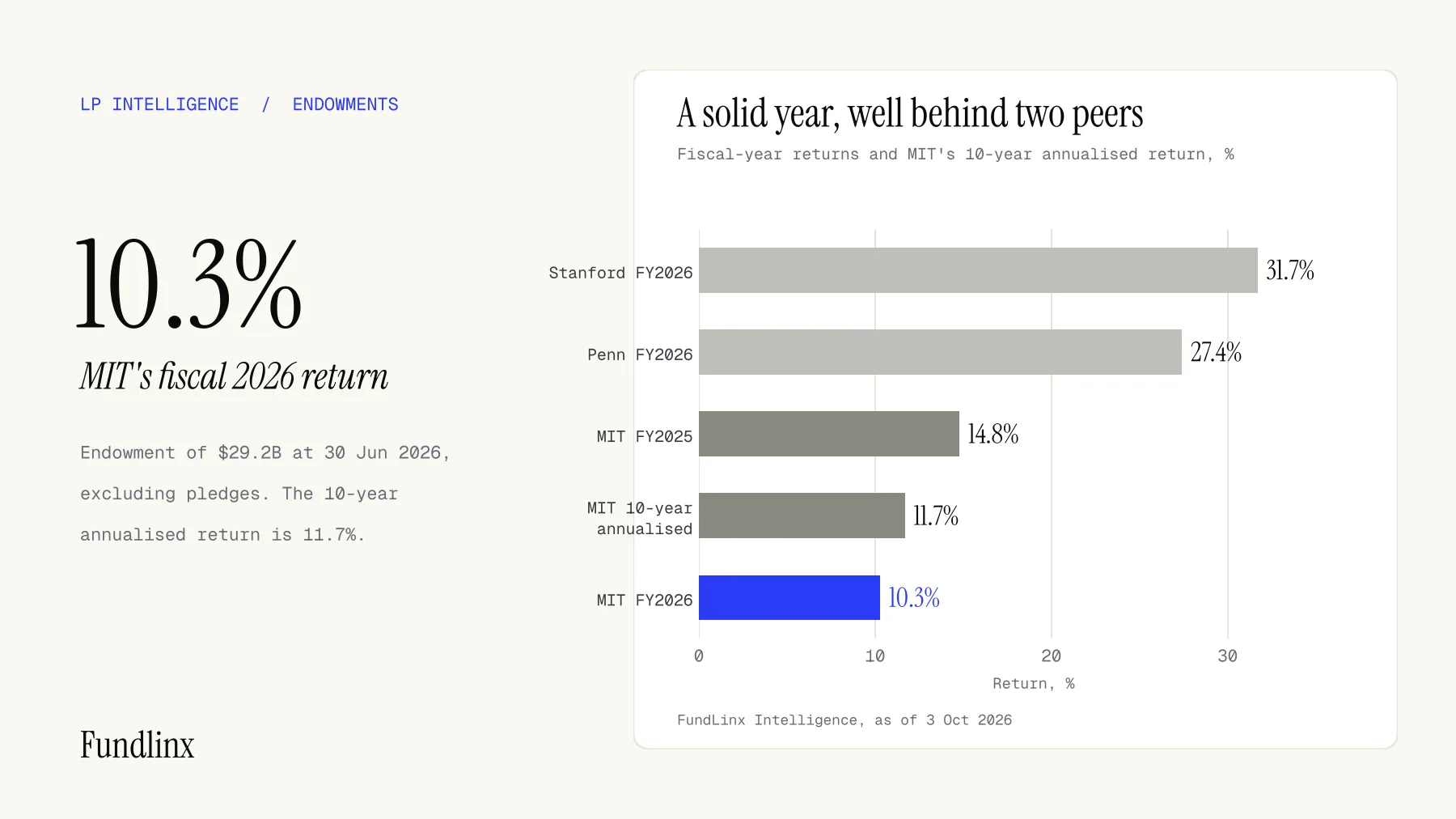
On 2 October 2026, MIT reported that its endowment returned 10.3% in fiscal 2026, the year to 30 June, for the pool of endowment and other funds that it invests together. The endowment stood at $29.2 billion at the end of the year, excluding pledges. MIT also reported a ten-year annualised return of 11.7%. The figures came with its annual financial results.
Who MIT is and how it reports
The Massachusetts Institute of Technology endowment is among the larger endowments in the US, and its numbers are worth reading as a data point on how long-horizon pools performed in the same year. MIT says most of its endowed funds are restricted and must be used for the purposes the donors set, with the bulk of the income supporting financial aid, research and education. The announcement did not give an asset allocation, a payout figure or a list of managers, and it points readers to the full financial report for detail.
On the figures as reported, the endowment grew from $27.4 billion a year earlier to $29.2 billion, an increase of about 6.6%.
A solid year beside two very strong ones
The return looks different against other results from the last fortnight. The Stanford University endowment returned 31.7% and its merged pool reached $61.5 billion, and the University of Pennsylvania endowment returned 27.4%. MIT's 10.3% is 21.4 percentage points below Stanford and 17.1 points below Penn. Penn's gain was reportedly driven by venture holdings in artificial intelligence and a large IPO, which points to portfolio construction, not just market direction, as a cause of the spread. MIT's release does not attribute its own return to any single source, so we do not either.
Against its own history, fiscal 2026 was a step down. MIT returned 14.8% in fiscal 2025, which means the latest year is 4.5 points lower. It is also 1.4 points below the ten-year annualised figure of 11.7%. A year below the decade average is not a warning sign by itself, but it does mean the endowment's most recent return added less than its long-run pace.
What the spread means for fundraising
Three results in two weeks give GPs a useful frame. Endowments that report returns between 10% and 32% for the same year are holding very different portfolios, and the committees behind them will ask different questions. An endowment with a lower return is more likely to ask how a new fund behaves relative to public markets and how fast it returns cash. One with a very high return is more likely to be asking where to rebalance away from concentrated winners. Neither group is a single target for a pitch.
Taken together, the three results are easy to quantify. The simple average of the three fiscal 2026 returns is 23.1%, but the median is 27.4% and two of the three, or 67% by count, were above 25%. That distribution is why an average is a poor guide: it hides a result at either end. For a GP, it is more useful to ask which of the three portfolios looks most like the investors you hope to approach and to build the message around that one. The endowment pool sizes also differ, with Stanford's merged pool at $61.5 billion and MIT's endowment at $29.2 billion, so the same ticket will mean a different share of each.
What GPs should do now
Treat MIT's release as a cue to prepare, not a signal about its pipeline, because it says nothing about its pacing or manager list. First, lead any approach with the ten-year number and your own long-run record, since that is the figure MIT itself placed next to the latest return. Second, put distributions to paid-in capital for each prior fund on the first page of your materials, with the dates; endowments that spend from income value cash returned. Third, include a short comparison of your fund against a public market equivalent so a committee that lagged peers this year can see how your strategy behaves in a strong equity year.
If you are raising a Fund I to III, ask a warm contact for a read on whether the endowment has a current emerging manager mandate, rather than guessing from the return. Endowments publish headline results only once a year, so the best time to refresh your file is now, while fiscal 2026 numbers are fresh and next year's budget is being set.
What to watch next
Last year several of the largest endowments reported in the second half of October, so more fiscal 2026 results are likely to follow, and each will add to the spread between funds. Watch MIT's full financial report for allocation detail and payout. For now the key figures are the $29.2 billion value, the 10.3% return and the 11.7% decade average. FundLinx members can see which endowments are active in private markets this quarter.
FundLinx Intelligence | FundLinx.ai