CPP Investments Sells Two Sydney Toll Road Stakes to Transurban for A$4.5 Billion
CPP Investments will sell its 10.5% of WestConnex and 25% of NorthWestern Roads Group for A$4.5 billion, ending a 16-year run and recycling capital the week it bought into a Germany-UK power link.
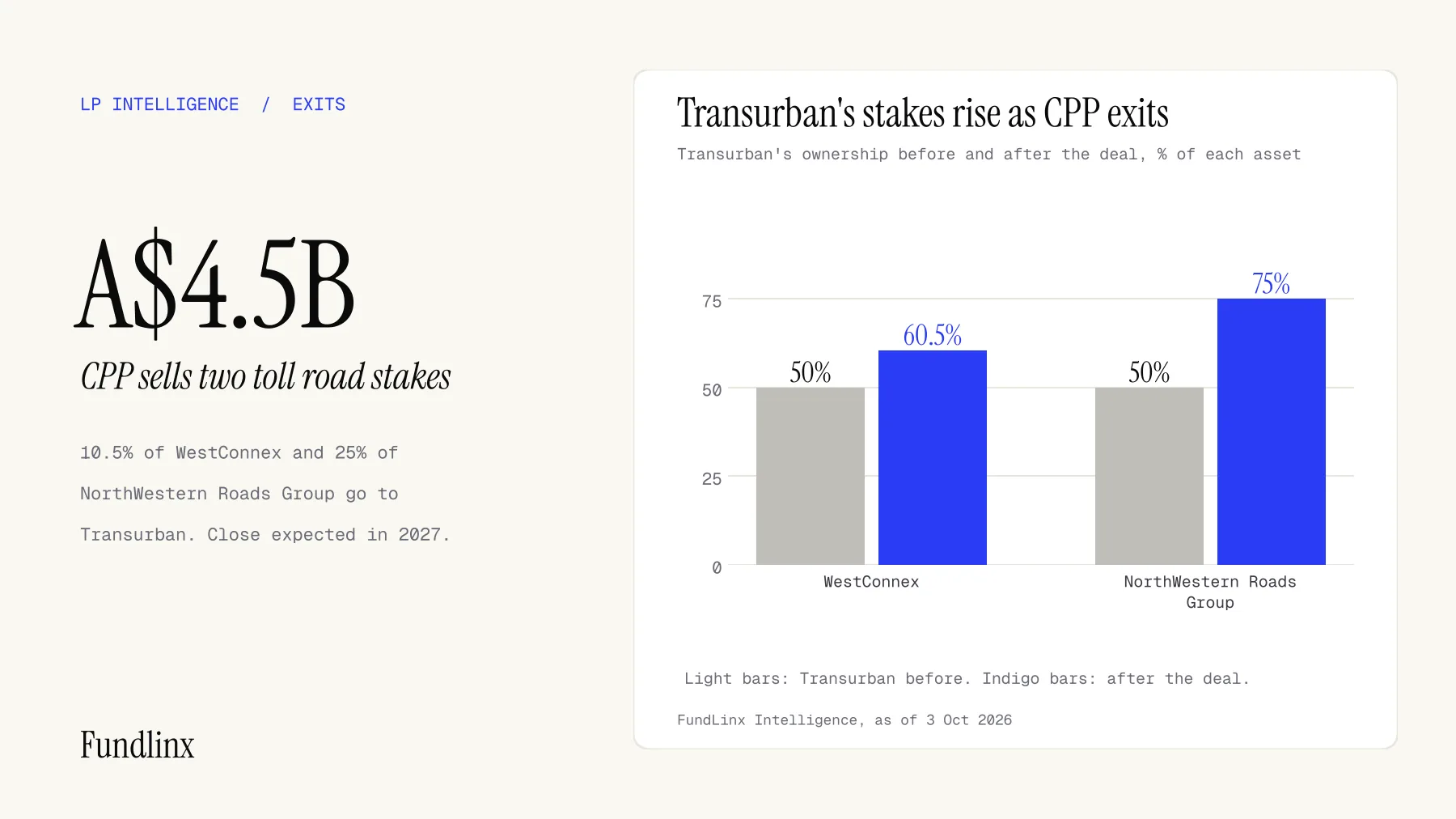
On 30 September 2026, CPP Investments announced that it will sell two stakes in Sydney toll roads to Transurban for A$4.5 billion. It is selling its 10.5% interest in WestConnex and its 25% interest in NorthWestern Roads Group, which holds Westlink M7 and NorthConnex. After the transaction Transurban will hold 60.5% of WestConnex, up from 50%, and 75% of NorthWestern Roads Group, up from 50%. Transurban plans to fund the purchase from committed debt facilities. Completion is expected during calendar 2027 and depends on regulatory approvals, including from the Australian competition regulator.
Who CPP Investments is and what it is doing here
Canada Pension Plan Investment Board, known as CPP Investments, is one of the largest pension funds in the world, with net assets above C$790 billion. The toll road stakes were built up over 16 years: Westlink M7 in 2010, NorthConnex in 2014 and WestConnex in 2018. James Bryce, managing director and head of infrastructure, said the sale lets CPP Investments realise value from mature assets while it keeps looking for investments that can produce attractive long-term returns.
The size of the sale matters for how it reads. A$4.5 billion is the price for both stakes together, so the figure covers a 10.5% minority position and a 25% position in a separate road group. The deal is a clean exit from a cluster of operating toll roads that have had years to mature, not a partial sell-down of a single holding.
How the sale compares with CPP's other recent moves
The sale arrives in the same week as two purchases. On 29 September CPP Investments agreed to take a majority stake in Tarchon Energy, a developer of a 1.4 gigawatt subsea power link between Germany and the UK, buying from the Copenhagen Infrastructure V fund for about C$1 billion. Belgium's Elia Group holds the other 25%, and the deal is expected to close by the end of the year. A day later CPP Investments announced the toll road exit, and earlier this week we covered its 27% purchase of an Indian hotel developer.
Its energy infrastructure activity is steady. Earlier deals include a 50% stake in Peru's Inkia Energy in February 2026, a $1 billion minority position in the US power platform AlphaGen in October 2025 and an indirect stake of about 13% in Sempra Infrastructure Partners in September 2025. Set beside those, the toll road sale reads as a reallocation: income-producing transport assets out, energy transition and cross-border power assets in. It also fits a wider Canadian pattern, as a survey we covered found that 52% of Canadian institutions plan to cut US equity while two thirds plan to add infrastructure.
What the announcement does not say
The sale price covers both stakes and was not split between WestConnex and NorthWestern Roads Group, so we cannot give a price for each. The gain on the original investments, the use of the proceeds and any change in CPP Investments' overall infrastructure target were not disclosed. It would be a mistake to read the sale as a decision to shrink infrastructure, since the same fortnight included a majority purchase in a power link, and it would be equally wrong to read the purchase as a shift away from transport assets. Each is a decision about a specific asset at a specific stage of its life.
Why this matters beyond one sale
Distributions are the scarce resource in private markets right now. A 16-year hold that returns A$4.5 billion for two stakes is a long cycle, but it is real cash going back to a pension that can redeploy it. For Canadian pension plans that invest directly, those exits are what fund the next set of purchases, and some of those purchases are from GP funds. Tarchon was bought from a GP's fund, which shows the kind of asset CPP Investments is willing to buy from a manager.
What GPs should do now
If you run infrastructure funds with operating assets approaching the end of their holding period, CPP Investments has just shown that it buys from fund managers as well as selling to strategic buyers. Prepare a short note on each mature asset that sets out contracted cash flows, regulatory milestones, and the timetable to exit, and share it with the larger Canadian plans through warm contacts, since a direct buyer can act on a single asset without waiting for a fund to be raised.
If you are raising capital for energy transition or cross-border power assets, take the Tarchon structure as a template: a minority partner with a utility alongside the pension, a clear regulatory path and a defined closing date. Anchor your distributions to paid-in capital record on assets sold, not marked, because LPs reading CPP's exit will ask how much of your last fund has returned as cash.
What to watch next
Watch for the regulatory decision on the toll road sale, the close of the Tarchon deal by the end of 2026, and the next infrastructure transaction from CPP Investments, which has made four major energy infrastructure investments since September 2025. FundLinx members can see which pension funds are active in infrastructure this quarter.
FundLinx Intelligence | FundLinx.ai